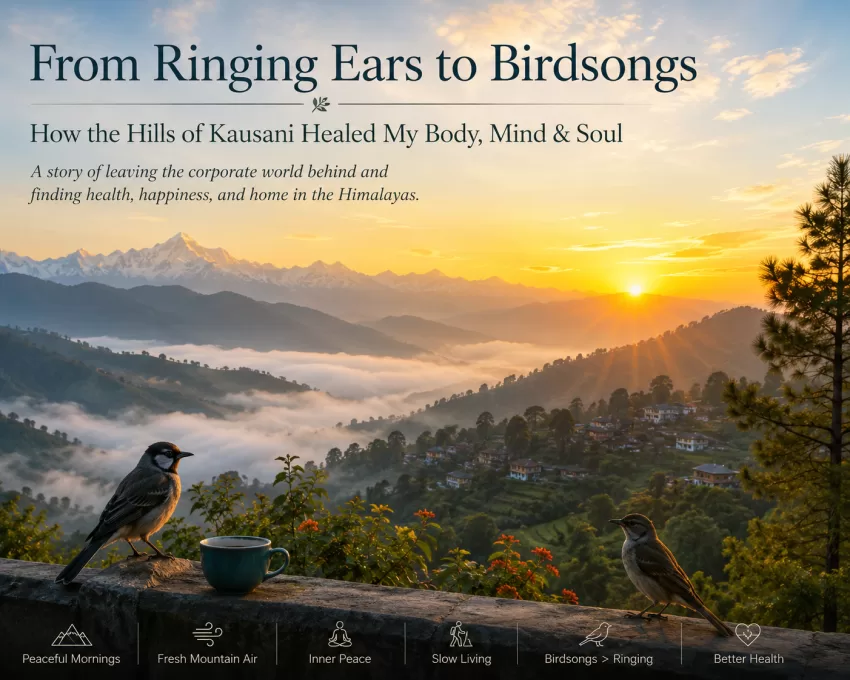
There was a time when my mornings began with alarm clocks, unread emails, and a pulse that already felt late for something. My blood pressure stayed stubbornly high, my mind rarely slowed down, and a strange ringing in my ears had become a permanent background soundtrack to life. At first, I blamed caffeine. Then deadlines. Then “modern lifestyle.” Eventually, I realized the problem was not a symptom. It was the environment I had built around myself.
Three years ago, I walked away from corporate life.
Not dramatically. No movie scene. No resignation speech with thunder outside the office window. Just a quiet realization that my body had started sending invoices for a lifestyle my soul no longer wanted to pay for.
Today, I live in the hills of Kausani, surrounded by pine forests, mountain air, long silences, and the occasional orchestra of Himalayan birds that begin before sunrise. Somewhere between leaving boardrooms and finding mountain trails, my high blood pressure slowly disappeared. Even the constant ringing in my ears transformed into something gentler, something alive. Birdsong replaced noise.
This is not a medical miracle story. It is a lifestyle story.
The Corporate Machine and the Slow Burn of Stress
For years, I lived the classic urban professional life. Long work hours. Endless screen exposure. Coffee replacing water. Sleep sacrificed in the name of productivity. Even weekends felt like loading screens between Monday mornings.
The strange thing about chronic stress is that it rarely arrives like a storm. It behaves more like silent rust. Tiny layers building every day until your body forgets what calm feels like.
My blood pressure remained high despite trying the usual fixes. Less salt. Occasional exercise. Better sleep attempts. But stress is clever. It follows you home through notifications, calls, targets, and mental clutter.
Then came the ringing in my ears.
At first, I ignored it. A faint electronic hum. Like distant static. But over time it became constant. In quiet rooms, it grew louder. Doctors suggested stress could be a contributing factor. That sentence stayed with me longer than expected.
Choosing Travel Over Routine
One day I realized something uncomfortable: I had optimized my life for income, not wellbeing.
So I made a choice that looked irrational on paper but felt deeply necessary internally. I quit my corporate job and began travelling full time.
No master plan. No five-year strategy deck. Just movement.
Travel slowed me down in ways therapy apps never could. I started noticing mornings again. Conversations became longer. Meals became intentional. Time stopped behaving like an enemy.
But the real shift happened when I reached the hills of Kausani.
Why Kausani Changed Everything
People often describe Kausani as the “Switzerland of India,” but that comparison feels incomplete. Kausani does not try to impress you. It slowly dissolves your internal noise instead.
The Himalayas sit quietly in the distance like ancient witnesses. Pine trees sway without urgency. Even the wind seems unbothered by ambition.
I decided to stay longer.
Then longer became permanent.
My daily rhythm transformed naturally:
- Early mornings instead of midnight scrolling
- Walking trails instead of traffic jams
- Fresh mountain air instead of conditioned office air
- Human conversations instead of endless corporate jargon
- Silence instead of constant stimulation
And slowly, my body responded.
The Day I Noticed the Ringing Had Changed
One morning, while sitting outside with tea, I realized something strange.
The ringing in my ears was no longer dominating my attention.
Instead, I could hear birds clearly.
Not metaphorically. Literally.
For years, my mind had been tuned into stress frequencies so intensely that silence itself had become distorted. In the hills, nature slowly recalibrated that internal static.
The sounds around me changed:
- Wood crackling in the distance
- Wind passing through deodar trees
- Cows grazing somewhere downhill
- Birds beginning their chaotic morning concerts
My nervous system, once permanently braced for meetings and deadlines, finally began unclenching.
Can Stress Really Affect Blood Pressure This Much?
Absolutely.
Chronic stress activates the body’s fight-or-flight system repeatedly. Over time, this can contribute to elevated blood pressure, poor sleep, anxiety, fatigue, and even physical symptoms like headaches or ringing sensations in the ears.
What helped me was not one magical cure. It was a complete environmental reset.
Here’s what likely made the biggest difference:
1. Reduced Mental Overload
Corporate work often creates invisible stress that follows you everywhere. Constant decision-making exhausts the nervous system.
2. Better Sleep
Mountain life restored natural sleep patterns. Dark nights and cooler temperatures helped tremendously.
3. Slower Living
In cities, urgency becomes addictive. In the hills, life moves at human speed again.
4. Nature Exposure
Research increasingly shows that spending time in nature lowers stress hormones and supports cardiovascular health.
5. Physical Movement Without Pressure
Walking in the hills never felt like “exercise.” It simply became life.
Escaping the Productivity Trap
Modern culture celebrates burnout like a trophy. Being busy is treated as importance. Rest feels illegal. Even vacations become content creation exercises.
But the body keeps score.
Mine certainly did.
Leaving corporate life did not make my problems vanish overnight. But it gave me space to hear myself again beneath the noise. Sometimes healing is not about adding more treatments. Sometimes it is about removing what keeps hurting you every day.
Final Thoughts
I still work. I still face stress. Life in the mountains is not a fantasy postcard where every sunrise heals trauma instantly. But the difference is profound.
Back then, my ears rang with pressure, tension, and mental exhaustion.
Now, mornings begin with Himalayan birds arguing passionately over invisible things in the pine trees. Honestly, they sound far healthier than most corporate meetings ever did. 🌲🐦
And somewhere along the way, my blood pressure stopped behaving like an emergency alarm.
Maybe the body understands something the mind takes years to learn:
Not every successful life is meant to be fast.