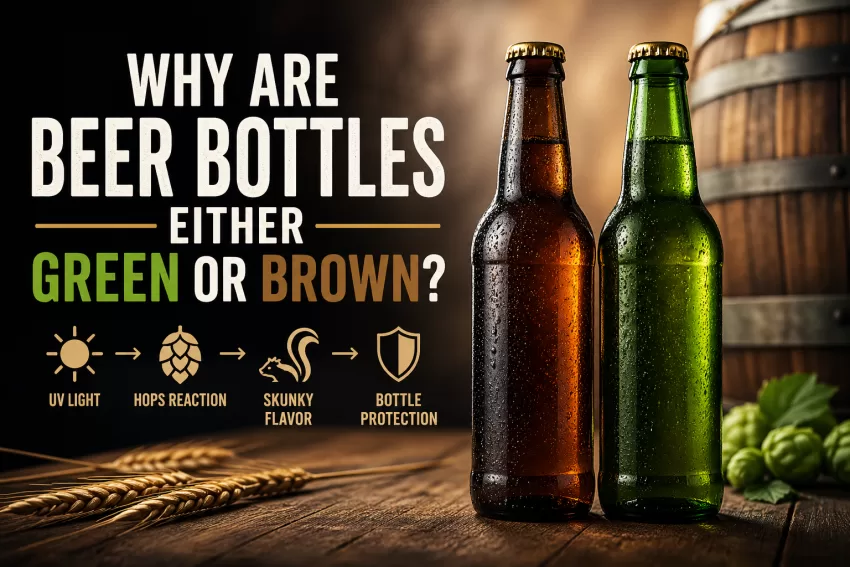
Walk into any liquor store and you’ll notice a quiet pattern: beer bottles tend to dress in shades of brown or green, like they’re part of an old, secret society with a strict color code. This isn’t a branding coincidence or aesthetic trend. It’s science, history, and a bit of brewing survival instinct poured into glass.
Let’s uncork the story.
🍺 The Real Villain: Light
Beer, as it turns out, is a bit of a diva when it comes to sunlight.
When beer is exposed to UV light, it triggers a chemical reaction involving compounds from hops (the ingredient that gives beer its bitterness and aroma). This reaction creates a compound called 3-methyl-2-butene-1-thiol—a name as unpleasant as its smell.
The result?
That infamous “skunky” aroma. Yes, the same scent you’d associate with a startled skunk is chemically similar to light-damaged beer.
🟤 Brown Bottles: The Bodyguards
Brown glass is the MVP here.
- It blocks most UV light
- Keeps beer fresher for longer
- Protects flavor integrity
Think of brown bottles as sunglasses for your beer, but the expensive kind that actually work.
Because of this, many serious brewers prefer brown bottles when quality preservation is the top priority.
🟢 Green Bottles: Style Meets Compromise
Green bottles are… well, a bit of a compromise.
They block some light, but not nearly as effectively as brown bottles. So why use them?
A Hint of History:
In the 19th century, beer bottles were originally brown. But during World War II, brown glass became scarce. Brewers, especially in Europe, started using green glass as an alternative.
Over time, green bottles developed an association with premium imported beers. That perception stuck.
So today, green bottles often signal tradition or branding rather than optimal protection.
⚗️ Modern Twist: Beating the Skunk
Some breweries have outsmarted the problem.
They use chemically modified hop extracts that don’t react with light the same way. This allows beer to survive even in green or clear bottles without turning into a skunky science experiment.
That’s why you’ll sometimes see clear bottles too, though they rely heavily on this workaround.
🍻 So, What Should You Choose?
If flavor matters most:
- Go for brown bottles or cans (cans block all light completely)
- Store beer away from sunlight, regardless of packaging
If you’re holding a green bottle, it’s not doomed… just don’t let it sunbathe.
Final Sip
The color of a beer bottle isn’t just a design choice. It’s a quiet battle between chemistry and craftsmanship. Brown wins on protection, green leans on legacy, and clear bottles? They’re the rebels using modern tricks to survive.
Next time you crack open a cold one, you’ll know: that bottle isn’t just holding beer, it’s guarding it.